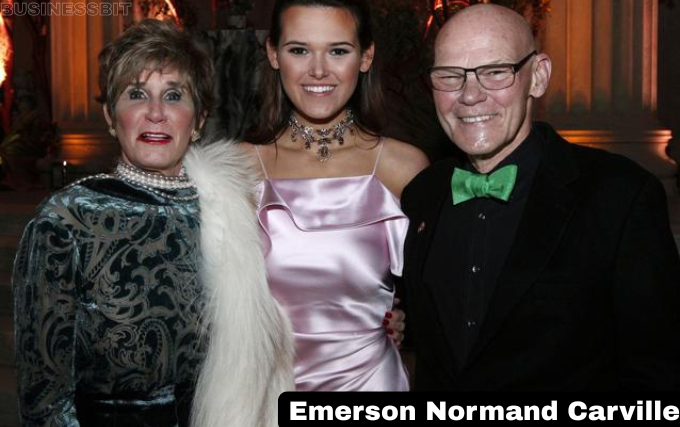

In the intricate tapestry of American political strategy and media commentary, few figures have managed to cultivate an aura of mystique quite like Emerson Normand Carville. While the political world is replete with operatives, consultants, and talking heads, Carville represents a unique archetype—a professional whose influence extends far beyond the traditional corridors of power.
The journey of Emerson Normand Carville represents a fascinating intersection of political acumen, media savvy, and strategic foresight that has shaped contemporary political discourse in ways both visible and subtle. Unlike many of his contemporaries who sought the limelight, Carville has masterfully balanced public engagement with private influence, creating a career trajectory that defies easy categorization. His story offers invaluable lessons about adaptability in an ever-changing political landscape, the art of strategic communication, and the enduring power of authentic intellectual engagement. For those seeking to understand the mechanics of modern political influence, the life and work of Emerson Normand Carville provides an essential case study.
Early Life and Formative Influences
The foundations of Emerson Normand Carville’s distinctive worldview were laid during a childhood that combined traditional Southern values with an uncommon intellectual curiosity. Growing up in Louisiana, Carville was immersed in a culture that celebrated political engagement as both entertainment and civic duty, where kitchen table discussions often centered on the machinations of state and national politics. This early exposure to the rough-and-tumble world of Southern politics instilled in young Carville an appreciation for the strategic dimensions of political competition that would later define his career. His family environment, which encouraged debate and critical thinking, provided the perfect crucible for developing the analytical skills that would eventually make him a sought-after political strategist.
The academic journey of Emerson Normand Carville further refined these nascent talents, as he pursued studies that bridged political science, communication theory, and strategic management. During his university years, Carville distinguished himself not merely through academic achievement but through his ability to synthesize complex political concepts into actionable strategies. His professors noted an unusual capacity for understanding the psychological dimensions of political persuasion, a skill that would later become his trademark. These formative experiences created the intellectual scaffolding upon which Carville would construct his remarkable career, establishing patterns of strategic thinking that would guide his professional decisions for decades to come.
The Emergence of a Political Strategist
Emerson Normand Carville’s entry into professional political consulting was marked by an intuitive grasp of the shifting dynamics that would come to define modern electoral politics. Rather than following conventional paths into campaign management or party apparatus, Carville carved out a niche as a strategic advisor who could navigate the increasingly complex media environment while maintaining authentic connections with grassroots constituencies. His early successes in state-level campaigns demonstrated an uncanny ability to translate complex policy positions into compelling narratives that resonated with diverse voter demographics, establishing his reputation as a strategist who could speak to both the head and the heart of the electorate.
The strategic philosophy that Carville developed during this period distinguished him from traditional political operatives through its emphasis on long-term relationship building over short-term tactical victories. He understood intuitively that sustainable political influence required more than winning individual elections; it demanded cultivating networks of trust and mutual interest that would persist beyond any single campaign cycle. This approach, which combined rigorous data analysis with genuine human connection, attracted the attention of major political figures who recognized in Carville a consultant capable of transcending the limitations of conventional political consulting. His growing reputation as a strategist who could see beyond immediate electoral calculus to broader movement building positioned him for the national prominence that would follow.
Rise to National Prominence
The ascent of Emerson Normand Carville to national political prominence occurred during a period of significant transition in American political communication, when traditional media structures were beginning to give way to more fragmented information ecosystems. Carville demonstrated remarkable adaptability during this shift, positioning himself as a bridge between established political institutions and emerging digital platforms. His appearances on national television programs, coupled with his strategic use of emerging social media platforms, allowed him to reach audiences that conventional political strategists struggled to access. This dual competency in both traditional and new media established Carville as a uniquely versatile figure in political consulting.
Perhaps the most distinctive aspect of Carville’s rise was his ability to maintain intellectual credibility while engaging in the often-contentious arena of partisan political commentary. Unlike many political commentators who sacrifice nuance for partisan advantage, Carville cultivated a reputation for analytical honesty that transcended ideological boundaries. His willingness to critique political figures across the spectrum, combined with his evident expertise in strategic communication, earned him respect from both sides of the political aisle. This reputation for intellectual integrity, while occasionally frustrating partisan clients, ultimately enhanced his influence by positioning him as a trusted voice in an era of increasing political polarization.
Media Presence and Public Influence
The media presence of Emerson Normand Carville represents a masterclass in strategic self-presentation, balancing accessibility with authority in ways that have kept him relevant across multiple media generations. His television appearances are characterized by a distinctive delivery that combines Southern charm with forensic analysis, creating a viewing experience that is both engaging and intellectually substantive. Carville has perfected the art of explaining complex political dynamics in accessible language without sacrificing analytical depth, a skill that has made him a favorite among producers seeking to elevate the quality of political programming. This media fluency has translated into sustained public influence that extends far beyond his official consulting roles.
Beyond his television presence, Carville has cultivated a diverse media portfolio that includes regular contributions to leading publications, a successful podcast, and strategic use of digital platforms to reach younger audiences. His written work displays the same combination of erudition and accessibility that characterizes his broadcast appearances, with opinion pieces that consistently generate discussion and debate across the political spectrum. This multi-platform approach to media engagement has allowed Carville to maintain relevance even as the media landscape has undergone dramatic transformation, demonstrating an adaptability that has become a hallmark of his career. The cumulative effect of these media efforts has been the establishment of Carville as a trusted interpreter of political events for a broad and diverse audience.
Strategic Consulting Philosophy
Emerson Normand Carville’s approach to political consulting reflects a deep engagement with both the theoretical foundations and practical applications of strategic communication. His methodology emphasizes the importance of authentic narrative construction over mere message discipline, arguing that the most effective political communication emerges from genuine values rather than manufactured talking points. This philosophy, which might be described as “principled pragmatism,” has guided Carville’s work with clients ranging from local candidates to national political organizations. His success suggests that audiences have become increasingly sophisticated consumers of political communication, capable of distinguishing authentic engagement from calculated manipulation.
The operational framework that Carville has developed over decades of consulting work prioritizes rigorous research, creative strategic thinking, and meticulous implementation. His practice emphasizes the importance of understanding the psychological and cultural contexts in which political messages are received, recognizing that effective communication must resonate with audiences’ existing values and beliefs. This approach has proven particularly effective in an era of increasing political tribalism, where messages that seem authentic and consistent with a candidate’s established identity often prove more persuasive than those that appear opportunistic or manufactured. Carville’s consulting philosophy represents a sophisticated response to the challenges of contemporary political communication, offering a model that balances strategic imperatives with ethical considerations.
Personal Life and Character
Beyond his professional achievements, the personal life of Emerson Normand Carville reveals dimensions of character that have contributed to his sustained influence and respect among colleagues and competitors alike. His long-standing marriage to a prominent figure in her own right has demonstrated his commitment to partnership and mutual support, qualities that have informed his approach to professional relationships as well. Friends and associates describe Carville as a person of considerable warmth and humor, whose genuine interest in others extends far beyond professional utility. This personal authenticity has translated into professional success, as colleagues and clients have consistently reported feeling valued and understood in their interactions with him.
The intellectual curiosity that characterized Carville’s youth has remained undiminished throughout his career, manifesting in wide-ranging reading habits and ongoing engagement with academic scholarship relevant to his professional interests. His personal library, reportedly extensive and eclectic, reflects an intellectual engagement that goes well beyond the immediate demands of political consulting. This commitment to continuous learning has allowed Carville to maintain relevance as the political landscape has evolved, incorporating new research findings and theoretical perspectives into his strategic practice. The integration of personal authenticity and intellectual rigor has made Carville a uniquely compelling figure, whose influence derives as much from who he is as a person as from what he has accomplished professionally.
Professional Relationships and Networks
The professional networks cultivated by Emerson Normand Carville over his lengthy career represent a strategic asset of considerable importance, spanning political affiliations and professional domains in ways that enhance his effectiveness as a consultant. These relationships extend far beyond the transactional exchanges common in political consulting, encompassing genuine friendships and mutually beneficial partnerships that have persisted across decades. Carville’s ability to maintain constructive relationships with figures across the political spectrum has positioned him as a valuable intermediary in an increasingly polarized political environment, capable of facilitating dialogue and finding common ground where others see only division.
The key to Carville’s success in relationship building lies in his genuine investment in the success and well-being of those with whom he works, a quality that distinguishes him from many in the competitive world of political consulting. His professional reputation is built on a foundation of reliability, discretion, and genuine commitment to the causes he serves, qualities that have earned him the trust of clients and collaborators alike. These professional networks, carefully cultivated over decades, provide Carville with access to information, resources, and opportunities that enhance his consulting practice and extend his influence. The depth and breadth of these relationships represent a form of professional capital that cannot be easily replicated, constituting a significant competitive advantage.
Challenges and Controversies
Like any figure who has operated at the highest levels of political consulting, Emerson Normand Carville has faced challenges and controversies that have tested his resilience and strategic judgment. The intense scrutiny that accompanies national political prominence has occasionally placed Carville at the center of media controversies, requiring careful navigation to preserve his professional reputation and personal well-being. His responses to these challenges have demonstrated the strategic thinking that characterizes his professional work, managing crises with a combination of transparency, strategic positioning, and judicious communication. These experiences have contributed to Carville’s personal and professional growth, refining his judgment and deepening his understanding of the political environments in which he operates.
Perhaps the most significant challenges Carville has faced have involved the ethical complexities inherent in political consulting, where the demands of client advocacy sometimes conflict with broader considerations of public interest. His approach to these ethical dilemmas has been characterized by careful reflection and a commitment to maintaining professional integrity even when such commitment involves short-term costs. This principled stance has, over time, enhanced rather than diminished his professional reputation, positioning him as a consultant whose advice carries the weight of ethical consideration as well as strategic insight. The challenges Carville has navigated have ultimately contributed to his professional development, strengthening his capacity to offer sophisticated guidance to clients facing similar ethical complexities.
Influence on Political Communication
The influence of Emerson Normand Carville on the field of political communication extends beyond his individual consulting engagements to shape broader practices and expectations within the profession. His emphasis on authentic narrative construction has influenced a generation of political consultants who have adopted similar approaches to strategic communication, recognizing the limitations of purely transactional political messaging. Carville’s work has contributed to an evolution in political communication that prioritizes long-term relationship building over short-term tactical advantage, a shift that has significant implications for how political campaigns are conducted and how political institutions relate to the public.
The intellectual contributions of Carville to political communication theory have also been substantial, with his writings and public presentations influencing academic thinking about the relationship between strategic communication and democratic practice. His insistence on the importance of truthfulness and authenticity in political messaging, even when such emphasis might appear disadvantageous in the short term, has challenged prevailing assumptions about the strategic value of manipulative communication techniques. This contribution to political communication theory has established Carville as an intellectual figure as well as a practitioner, whose influence extends beyond the immediate demands of campaign consulting to shape broader understandings of political communication.
Legacy and Ongoing Impact
The legacy of Emerson Normand Carville is still being written, but certain contours of his influence have already become apparent to observers of American political life. His career exemplifies a model of political engagement that combines professional success with intellectual contribution and personal integrity, offering a template for those who would follow in his footsteps. The institutions and practices that Carville has helped to establish will likely persist beyond his active career, constituting a permanent contribution to the practice of political consulting and strategic communication. This institutional legacy, combined with the influence of his professional networks and intellectual contributions, ensures that Carville’s impact will be felt for years to come.
Looking forward, the ongoing impact of Carville’s work will likely be felt through the professional practices of those he has trained and mentored, as well as through the continued relevance of his strategic frameworks. The adaptability that has characterized his career suggests that Carville will continue to evolve as the political landscape transforms, finding new ways to contribute to public discourse and political strategy. His example offers encouragement to those who believe that political engagement can be both effective and principled, demonstrating that professional success and personal integrity need not be mutually exclusive. The enduring relevance of Emerson Normand Carville’s work testifies to the power of strategic thinking combined with authentic commitment, a combination that has proven remarkably resilient across multiple decades of political change.
Conclusion
The story of Emerson Normand Carville represents far more than a conventional political biography; it constitutes a revealing portrait of how strategic intelligence, authentic engagement, and principled practice can combine to create sustained influence in American political life. From his early development in the vibrant political culture of Louisiana to his emergence as a nationally recognized strategist and commentator, Carville has consistently demonstrated the qualities that distinguish enduring influence from momentary prominence. His career offers invaluable lessons for aspiring political professionals while providing the general public with insight into the mechanics of modern political communication. The balance Carville has achieved between professional success and personal integrity offers a compelling model for those seeking meaningful engagement with the political process.
As we reflect on the life and work of Emerson Normand Carville, what emerges most clearly is the importance of adaptability, authenticity, and intellectual engagement in navigating the complexities of contemporary political life. In an era marked by increasing polarization and fragmentation, Carville’s example suggests that sustained influence requires the capacity to transcend partisan divisions while maintaining consistent principles. His career demonstrates that political engagement need not be cynical or manipulative, offering instead a vision of strategic communication grounded in genuine values and authentic relationships. The legacy of Emerson Normand Carville, still very much in formation, promises to continue shaping American political discourse for years to come, offering guidance and inspiration to those who would engage constructively with the challenges of democratic politics.
Frequently Asked Questions
Who is Emerson Normand Carville and why is he significant in political consulting?
Emerson Normand Carville is a distinguished political strategist and media commentator whose career spans multiple decades of American political life. His significance stems from his innovative approach to political communication, which emphasizes authentic narrative construction and genuine relationship building over purely tactical messaging. Carville’s influence extends beyond individual campaigns to shape broader professional practices in political consulting, while his media presence has made him a trusted interpreter of political events for a broad audience. His career exemplifies how strategic intelligence combined with personal integrity can create sustained influence in the demanding world of political consulting.
What distinguishes Emerson Normand Carville’s approach to political strategy?
Carville’s strategic approach distinguishes itself through its emphasis on authentic narrative construction and long-term relationship building over short-term tactical victories. He has argued consistently that the most effective political communication emerges from genuine values rather than manufactured talking points, a philosophy that has influenced a generation of political consultants. His methodology combines rigorous research with creative strategic thinking, emphasizing the importance of understanding psychological and cultural contexts in which political messages are received. This principled pragmatism has proven remarkably effective across multiple decades of political consulting.
How has Emerson Normand Carville adapted to changes in the media landscape?
Throughout his career, Carville has demonstrated remarkable adaptability to changes in the media landscape, maintaining relevance across multiple media generations. He has successfully navigated the transition from traditional broadcast media to digital platforms, cultivating a diverse media presence that includes television appearances, written commentary, podcasting, and strategic use of social media. This multi-platform approach has allowed Carville to reach younger audiences while maintaining connection with more traditional media consumers, demonstrating the strategic flexibility that has characterized his career. His media fluency has established him as a uniquely versatile political commentator.
What is the enduring significance of Emerson Normand Carville’s work?
The enduring significance of Carville’s work lies in his contribution to professional practices in political consulting and his influence on how political communication is understood and practiced. His emphasis on authenticity and integrity in political messaging has challenged prevailing assumptions about the strategic value of manipulative communication techniques, contributing to an evolution in political communication that prioritizes genuine engagement. The institutional legacy of his work, combined with the influence of his professional networks and intellectual contributions, ensures that his impact will be felt for years to come. His career offers a compelling model for principled engagement with the political process.
What can aspiring political professionals learn from Emerson Normand Carville’s career?
Aspiring political professionals can learn numerous valuable lessons from Carville’s career, including the importance of adaptability in navigating changing political landscapes, the value of authentic relationship building over purely transactional professional interactions, and the significance of maintaining intellectual integrity while pursuing professional success. His example demonstrates that sustained influence requires more than short-term tactical victories, emphasizing the importance of developing strategic frameworks that can withstand the test of time. Carville’s career also illustrates the value of multi-platform media engagement and the importance of cultivating diverse professional networks across the political spectrum.