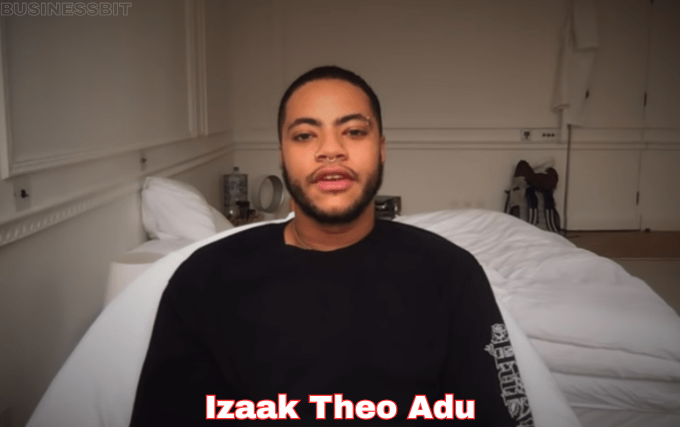

Izaak Theo Adu exists in a fascinating space within contemporary culture—recognized both as the only child of the legendary singer Sade and as a transgender man who has documented his transition with remarkable candor. His story intertwines questions of identity, artistic expression, and the evolving dynamics of family support in the public eye. While many know his name in connection with his famous mother, Izaak has carved out his own distinct path as an artist and model.
The Early Years of Izaak Theo Adu: London Roots and Creative Beginnings
Izaak Theo Adu was born in London, England, the only child of Nigerian-British soul singer Sade Adu and Jamaican reggae producer Bob Morgan . His early years were spent in the vibrant cultural tapestry of London before his family relocated to England’s southwest region when he was nine years old . This transition from the bustling capital to a more pastoral setting would prove formative for a young person inclined toward introspection and artistic exploration. Growing up with a mother whose artistry defined an era and a father deeply embedded in music production, Izaak was surrounded by creative energy from the very beginning. Yet, his parents largely shielded him from the glare of celebrity culture, allowing him a childhood that prioritized normalcy and genuine self-discovery over public exposure.
His educational path led him to a Steiner School, an environment that would profoundly influence his worldview and creative sensibilities. Izaak himself has credited this educational approach with teaching him “to see the beauty in nature and what our world has to offer,” and it was within these walls that he developed what he describes as his “deep love for art” . The Steiner philosophy, with its emphasis on holistic development and imaginative thinking, provided fertile ground for a young person already inclined toward visual expression. This early training in observation and creativity would later manifest in his artistic pursuits, from illustration and painting to sculpture and photography. Understanding this foundation is essential to appreciating the trajectory of a man who has consistently sought to define himself through creative means rather than inherited fame.
Family Ties: Sade, Bob Morgan, and a Legacy of Artistic Expression
The family connections surrounding Izaak Theo Adu extend far beyond his mother’s iconic status. His father, Bob Morgan, is a Jamaican reggae producer whose contributions to the music world, while less publicly celebrated than Sade’s, represent a significant cultural lineage in their own right . The union of Sade Adu—born in Nigeria and raised partly in England—and Bob Morgan—whose Jamaican heritage roots him in the Caribbean diaspora—created a multicultural foundation that informed Izaak’s identity from birth. This dual heritage, encompassing African, Caribbean, and British influences, shaped not only his worldview but also his artistic sensibilities. The themes of hybridity, belonging, and self-creation that would later define his public journey find their origins in this rich familial tapestry.
While much has been made of Sade’s fame, her approach to motherhood has been notably grounded. Izaak has repeatedly described her not as a celebrity but as “Mumma”—a figure of unwavering support and what he calls “the purest heart” . Their bond, tested and strengthened through his transition, reveals a relationship built on mutual respect and deep affection. Sade’s decision to maintain a famously private public persona while supporting her son’s visibility as a transgender man speaks to a carefully considered balance between protecting family and empowering authenticity. The family’s support network also included his grandmother, whom Izaak noted remained supportive throughout his transition, never faltering on pronouns or his chosen name despite generational differences . This multigenerational acceptance underscores the depth of the family’s commitment to Izaak’s wellbeing.
Navigating Transition: Izaak Theo Adu’s Journey and His Mother’s Support
Izaak came out as transgender in 2016, announcing his identity on National Coming Out Day . His decision to share this aspect of his life publicly—first with close followers on Instagram and later through more extensive documentation—represented a choice to embrace visibility rather than retreat into privacy. This was not a path without significant challenges. Izaak has spoken openly about the psychological and physical toll of transition, describing it as “trying, tiring, painful, emotionally exhausting, physically exhausting, uncomfortable” . In one particularly vulnerable post, he questioned, “Why the f**k do I have to endure this to be who I am?” before affirming his determination to “walk it to the end” . Such honesty about the difficulties of transition has resonated with many who face similar struggles.
Throughout his six-month recovery following gender-affirming surgery in 2019, Sade remained by his side—a fact Izaak celebrated in a heartfelt Instagram tribute that has become something of a landmark in public expressions of maternal support for transgender children. “Thank you for staying by my side these past six months Mumma,” he wrote. “Thank you for fighting with me to complete the man I am. Thank you for your encouragement when things are hard, for the love you give me” . He described coming out as “the best feeling in the world,” saying, “I felt like I could breathe for the first time in my life” . His public gratitude extended beyond his mother to include his father, whose advice to “keep your eyes on the horizon” became a guiding mantra during recovery .
Beyond Transition: Artistry, Modeling, and a Flourishing Career
Izaak Theo Adu’s identity extends far beyond his transition narrative, significant as that journey has been. His artistic education included a two-year foundation course at SGS College in the UK, where he explored illustration, printmaking, painting, sculpture, and photography, followed by four years of further study in Brighton . His creative portfolio features portraits of cultural figures such as Drake, Donald Glover, and his mother, demonstrating both technical skill and a keen observational eye for personality and presence . Before his transition, his artistic inclinations were already evident; W Magazine noted his sketches and drawings posted to Tumblr, ranging from celebrity portraits to more whimsical subjects . His early Instagram presence, while sometimes playful, also offered earnest encouragement to other transgender individuals, with Izaak writing, “I am always here to talk if anyone needs advise or just a random chat!” .
In addition to his visual art, Izaak has established a presence in the fashion world. Signed with Next Models, he has walked the runway for brands including Vetements and participated in Rihanna’s Savage X Fenty show in September 2021 . His modeling work represents another dimension of self-expression, one that leverages his distinctive presence and perspective. In 2021, he married Emily Margaret Shakeshaft in a Hawaiian ceremony, with their relationship beginning on Instagram . Emily has spoken candidly about her limited prior exposure to transgender individuals, noting that she “didn’t know anyone transgender” before meeting Izaak, a reality that reflects the broader visibility challenges facing transgender communities . Their marriage, and Emily’s willingness to speak about her learning journey, adds a relational dimension to Izaak’s public narrative that transcends typical celebrity-adjacent coverage.
Untold Facts and Lesser-Known Dimensions of Izaak Theo Adu
While much media attention has focused on Izaak’s transition and his mother’s support, several aspects of his life and character remain less explored. His father’s philosophy of “keep your eyes on the horizon” reveals a stoic resilience passed down through the family—a mindset that has clearly influenced Izaak’s approach to adversity . His early education in a Steiner School shaped not only his artistic sensibilities but also a holistic worldview that emphasizes connection between creativity and nature . His decision to pursue carpentry and joinery alongside his father represents an embrace of craft and tangible creation that complements his more conceptual artistic work . These dimensions suggest a person grounded in practical creativity rather than simply relying on aesthetic expression.
Izaak’s approach to public documentation of his transition also warrants deeper consideration. Rather than waiting until after the process to share his experience, he documented it in real time—including hospital selfies and candid reflections on pain and frustration . This choice to allow the world to witness the messy, uncomfortable reality of transition, not just its triumphant conclusion, represents a form of advocacy that prioritizes authenticity over polish. He expressed a clear motivation for this visibility: “If I can take away someone’s pain by just posting a selfie, then I will” . This impulse toward service through sharing, even when the sharing exposed him to criticism, reflects a maturity and sense of purpose that extends beyond personal expression.
Conclusion
Izaak Theo Adu’s life narrative resists easy categorization. He is simultaneously the child of an iconic artist and an artist in his own right; a transgender man whose story has been publicly documented and yet who retains layers of privacy; a model, an illustrator, a carpenter, and a partner. The family connections that shaped him—Sade’s steadfast support, Bob Morgan’s guiding philosophy, a grandmother’s acceptance—provided a foundation that allowed him to pursue authenticity without sacrificing belonging. His willingness to share his journey, including its most difficult moments, has made him a figure of encouragement for others navigating similar paths. Ultimately, Izaak Theo Adu’s story is not simply one of celebrity adjacency or transition narrative, but of a person actively constructing a life and identity on his own terms, drawing from family, art, and an unwavering commitment to selfhood.
Frequently Asked Questions
Who are Izaak Theo Adu’s parents?
Izaak is the only child of singer Sade Adu and Jamaican reggae producer Bob Morgan .
When did Izaak Theo Adu come out as transgender?
He publicly came out in 2016 on National Coming Out Day .
What does Izaak Theo Adu do professionally?
He is an artist, model signed with Next Models, and has worked in carpentry and joinery .
Is Izaak Theo Adu married?
Yes, he married Emily Margaret Shakeshaft in a Hawaiian ceremony in 2021 .