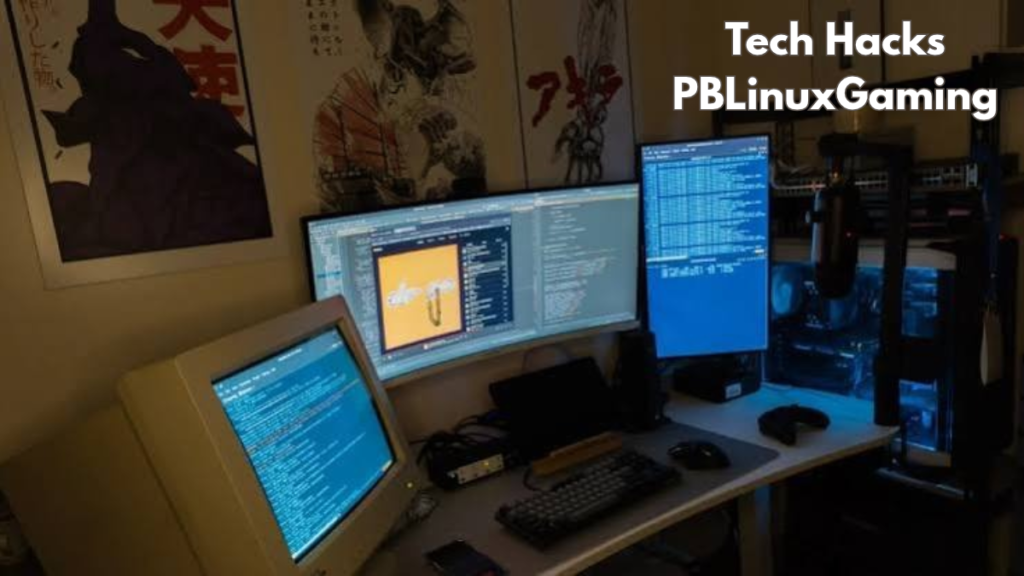

Tech hacks PBLinuxGaming describes practical techniques for improving the Linux gaming experience through better system configuration, graphics drivers, Proton compatibility, performance monitoring and troubleshooting. These methods help gamers understand their hardware, reduce unnecessary background activity and achieve more consistent gameplay. The best results come from making carefully tested changes rather than applying random commands or expecting every game to run faster.
Linux gaming has developed considerably, giving players more ways to enjoy PC games without relying entirely on Windows. However, getting the best experience requires understanding several important components, including Steam, Vulkan, graphics drivers and compatibility tools. This guide explains the most useful techniques, how they work and how beginners can apply them safely.
Quick Facts About Tech Hacks PBLinuxGaming
| Category | Key Information |
| Main topic | Linux gaming optimisation |
| Primary purpose | Improve gaming performance and compatibility |
| Operating systems | Ubuntu, Fedora, Arch Linux and other distributions |
| Important platform | Steam |
| Compatibility technology | Proton and Wine |
| Graphics technology | Vulkan and OpenGL |
| Performance tools | GameMode and MangoHud |
| Intended audience | Beginners and experienced Linux gamers |
| Main benefits | Better configuration, monitoring and troubleshooting |
What Is Tech Hacks PBLinuxGaming?
Tech Hacks PBLinuxGaming refers to practical Linux gaming tips, configuration methods and optimisation techniques designed to help users improve their PC gaming experience. The topic covers everything from selecting suitable graphics drivers to configuring Steam Play, managing background applications and identifying performance problems.
It is important to understand that the phrase describes a collection of techniques rather than one officially recognised Linux software package. The PBLinuxGaming website is presented as a technology information resource focused on Linux and broader computing topics. Readers should distinguish between educational guidance and independently verified software recommendations.
The central idea is straightforward: Linux gaming performance depends on several components working together. A suitable graphics driver, compatible game configuration, sufficient hardware resources and properly maintained software can make a noticeable difference to the overall experience.
Why Linux Gaming Optimisation Matters
Linux offers flexibility, customisation and access to a wide range of open-source technologies. Nevertheless, gaming performance can vary depending on the distribution, hardware, graphics driver and compatibility layer being used.
Some games run directly through native Linux versions, while others depend on compatibility software. Incorrect configurations can produce stuttering, crashes, graphical problems or lower-than-expected frame rates.
Optimisation helps address these issues by focusing on the actual cause rather than changing unrelated system settings.
For example, updating a graphics driver may resolve rendering problems, while reducing unnecessary background applications can free up memory and processor resources.
The goal is not simply to achieve the highest possible FPS. Stable frame times, reliable controls, compatible software and consistent performance are equally important.
Essential Tech Hacks PBLinuxGaming for Better Performance
The most useful tech hacks PBLinuxGaming techniques focus on improvements that can be measured and reversed. Instead of installing numerous optimisation packages, start with your graphics drivers, system updates and game compatibility.
Keep Your Linux System Updated
Regular updates help maintain system security, software compatibility and hardware support. Linux distributions frequently provide updates for the kernel, graphics components, desktop environments and other essential packages.
An outdated system may contain bugs that affect gaming stability or compatibility with newer hardware.
For Fedora, Arch Linux and other distributions, follow the package management instructions provided by the relevant distribution.
Avoid mixing packages from unrelated repositories without understanding the consequences. Incompatible libraries can create more problems than they solve.
Install the Correct Graphics Drivers
Graphics drivers are among the most important components of a Linux gaming computer. They allow applications to communicate effectively with the GPU and use graphics technologies such as Vulkan and OpenGL.
The correct driver depends on whether the computer uses AMD, NVIDIA or Intel graphics hardware.
AMD and Intel graphics commonly use Mesa drivers, although hardware support varies by generation. Mesa provides implementations for graphics technologies including OpenGL and Vulkan.
Always choose drivers compatible with your distribution and hardware. Installing an unrelated driver or forcing an unsupported version can cause display problems.
Configure Steam Proton Correctly
Proton is one of the most important technologies behind modern Linux gaming. Developed by Valve, it allows many Windows games to run through Steam on Linux using Wine and additional components.
To enable Proton:
- Open the Steam application.
- Select Settings.
- Navigate to Compatibility or Steam Play.
- Enable compatibility for supported titles.
- Enable compatibility for other titles if required.
- Restart Steam when prompted.
Individual games can also use different Proton versions through their Properties and Compatibility settings.
Not every Windows game works perfectly. Some titles have launcher problems, missing functionality or restrictions associated with anti-cheat software.
Before changing compatibility settings, check the game’s current status through ProtonDB and Steam’s compatibility information. A different Proton version may solve certain problems, but it is not a universal fix.
Use Vulkan Where Supported
Vulkan is a modern graphics and computing API that provides applications with relatively direct access to GPU functionality.
It is particularly relevant to Linux gaming because several compatibility technologies translate Windows graphics instructions into Linux-supported graphics interfaces.
However, Vulkan is not automatically faster than every alternative. Results depend on the game engine, graphics hardware, driver implementation and software configuration.
Users should ensure that their hardware and drivers support the required Vulkan features before troubleshooting a game that depends on them.
Do not force Vulkan launch options into every game. Follow the game’s documentation and use recommended settings for the particular title.
Useful Linux Gaming Performance Tools
Performance monitoring tools help identify problems instead of relying on guesswork. Two useful options are GameMode and MangoHud.
GameMode for Temporary Optimisation
GameMode, developed by Feral Interactive, is a Linux daemon and library that allows games to request temporary system optimisations.
Depending on the configuration, it can adjust selected system settings while a game is running.
A typical Steam launch option is:
gamemoderun %command%
This can be added through the game’s Properties section in Steam.
Users can check whether the GameMode service is working with:
gamemoded -s
GameMode does not guarantee higher frame rates. Its effectiveness depends on the system, workload and configuration.
MangoHud for FPS and Hardware Monitoring
MangoHud is an overlay for Vulkan and OpenGL applications. It helps players monitor performance while a game is running.
Depending on the configuration, it can display:
- Frames per second.
- GPU utilisation.
- CPU utilisation.
- GPU temperature.
- CPU temperature.
- Frame-time information.
- Memory usage.
A common Steam launch option is:
mangohud %command%
The information can help determine whether a game is limited by the CPU, GPU or another system resource.
For example, consistently high GPU utilisation may indicate a graphics-related bottleneck, while high CPU utilisation may suggest processor limitations.
Monitoring results should be interpreted carefully because temperatures and utilisation levels vary between hardware models.
Reduce Lag and Improve Frame Stability
High FPS does not always mean smooth gameplay. A game can display a high average frame rate while still experiencing inconsistent frame times.
Frame pacing describes how consistently individual frames are delivered. Poor frame pacing can make gameplay feel uneven even when the average FPS appears acceptable.
Try these practical adjustments:
- Close unnecessary browser tabs and background applications.
- Disable applications that consume significant system resources.
- Use graphics settings appropriate for your GPU.
- Reduce demanding shadows and reflections if necessary.
- Avoid running unnecessary recording software.
- Check whether the game is installed on a sufficiently fast storage device.
- Monitor CPU and GPU temperatures during longer sessions.
If a game performs poorly after changing settings, restore the previous configuration and test again.
Making one adjustment at a time is much more useful than changing multiple settings simultaneously.
Manage Graphics Settings for Your Hardware
Every gaming computer has different performance limitations. A configuration that works well on a powerful desktop may be unsuitable for an older laptop.
Resolution is one of the most influential graphics settings. Higher resolutions require the GPU to render more pixels, potentially reducing frame rates.
Other demanding settings include:
| Graphics Setting | Performance Consideration |
| Resolution | Higher resolutions increase GPU workload |
| Shadows | Detailed shadows can require additional GPU resources |
| Anti-aliasing | Some methods increase rendering demands |
| Texture quality | Higher settings require more video memory |
| Reflections | Advanced reflections can be demanding |
| Ambient occlusion | Can increase graphics processing requirements |
| V-Sync | Can affect frame delivery and input responsiveness |
Start with the game’s recommended graphics preset. Adjust individual settings according to your hardware and the performance you observe.
There is no universal graphics configuration that guarantees the best results for every Linux gaming computer.
Troubleshooting Common Linux Gaming Problems
Even a properly configured Linux system can encounter gaming problems. Understanding the symptoms helps narrow down possible causes.
Games Crashing on Startup
A game that closes immediately may have a compatibility issue, missing dependency or incorrect configuration.
First, check whether the game supports Linux natively or requires Proton. If it uses Proton, try a recommended version through Steam’s compatibility settings.
Also check the game’s available logs and official support information before reinstalling software.
Low FPS During Gameplay
Low FPS can result from limited hardware, outdated drivers, high graphics settings or background processes.
Use MangoHud to monitor CPU and GPU utilisation. Check temperatures and confirm that the game is using the intended graphics processor.
On laptops with integrated and dedicated graphics, incorrect GPU selection can affect performance.
Stuttering and Freezing
Stuttering can be caused by shader compilation, storage limitations, memory pressure, background activity or inconsistent frame delivery.
Check whether the issue happens during specific scenes or throughout the entire game.
Lowering demanding graphics settings, closing unnecessary applications and allowing shader compilation to finish may help.
Multiplayer Games Not Working
Some multiplayer titles depend on anti-cheat systems or services that may not support Linux.
Check the game’s official compatibility information before purchasing or changing your operating system configuration.
Installing different Proton versions cannot guarantee that unsupported anti-cheat functionality will become available.
Advanced Tech Hacks PBLinuxGaming Users Should Understand
Experienced users may explore additional tools and configuration options, but advanced changes should always have a clear purpose.
Understand CPU and GPU Bottlenecks
A bottleneck occurs when one system component limits the performance of another.
For example, a CPU that cannot process game instructions quickly enough may prevent a powerful GPU from reaching its full potential.
Similarly, demanding graphics settings may place excessive pressure on the GPU.
Use performance monitoring to identify the limiting component before upgrading hardware or changing system settings.
Consider Gamescope
Gamescope is a microcompositor developed by Valve for gaming-focused environments.
It provides additional control over how games are presented and can be useful for particular display and gaming configurations.
However, it is not necessary for every Linux gaming setup. Beginners should understand their standard desktop and display configuration before experimenting with additional compositors.
Avoid Unnecessary Kernel Tweaks
Advanced Linux guides sometimes recommend changing kernel parameters, CPU governors or memory settings.
These changes can be useful in particular situations, but they are not universal performance improvements.
Incorrect settings can cause instability, additional power consumption or unexpected behaviour.
Keep a record of configuration changes and understand how to reverse them before applying advanced tweaks.
Is Tech Hacks PBLinuxGaming Suitable for Beginners?
Yes. The underlying techniques are accessible to beginners when introduced gradually.
New Linux gamers do not need to understand every command or graphics technology immediately. Starting with system updates, correct drivers and basic Steam compatibility settings provides a sensible foundation.
A beginner can follow this learning order:
- Choose a Linux distribution with suitable hardware support.
- Install system updates.
- Check graphics driver compatibility.
- Install Steam from a trusted source.
- Configure Proton when necessary.
- Test games individually.
- Use MangoHud to monitor performance.
- Explore GameMode if additional optimisation is appropriate.
This approach makes troubleshooting easier because each stage builds on the previous one.
Safety Tips Before Applying Linux Gaming Tweaks
Not every performance tip published online is reliable. Some commands are outdated, distribution-specific or potentially harmful when copied without understanding their purpose.
Follow these precautions:
- Download software from official repositories or trusted project websites.
- Avoid running unknown scripts with administrator privileges.
- Read commands before executing them.
- Back up important configuration files.
- Avoid combining several experimental tweaks.
- Check compatibility with your Linux distribution.
- Use official documentation when changing drivers or kernel settings.
It is also worth remembering that overclocking and power-management changes can increase heat or power consumption. Monitor your hardware and follow manufacturer recommendations.
Conclusion
Tech hacks PBLinuxGaming provides a useful way to explore practical Linux gaming optimisation, from Proton compatibility and Vulkan support to graphics drivers, GameMode and MangoHud. The most effective improvements usually begin with understanding your hardware and identifying the actual cause of performance problems.
Rather than applying every available tweak, focus on stable drivers, sensible graphics settings, reliable software sources and measurable results. With a careful approach, Linux gamers can build a more compatible, responsive and enjoyable gaming environment without compromising system stability.
Frequently Asked Questions
1. What is Tech Hacks PBLinuxGaming?
tech Hacks PBLinuxGaming refers to practical Linux gaming techniques covering performance optimisation, Proton compatibility, graphics drivers and troubleshooting.
2. Can Tech Hacks PBLinuxGaming improve gaming performance?
es, appropriate Linux gaming optimisations can improve stability and performance, depending on your hardware, drivers and game configuration.
3. Is Linux good for PC gaming?
Yes, Linux supports many PC games through native versions and compatibility technologies such as Valve’s Proton.
4. What is Proton in Linux gaming?
Proton is Valve’s compatibility tool that allows many Windows games to run through Steam on Linux.
5. How can I increase FPS on Linux?
Update graphics drivers, adjust demanding graphics settings, reduce unnecessary background activity and monitor system performance.
6. What is GameMode used for in Linux?
GameMode allows games to request temporary system optimisations that may improve performance in suitable configurations.
7. Is MangoHud useful for Linux gamers?
Yes, MangoHud displays useful performance information such as FPS, CPU usage, GPU usage and hardware temperatures.
8. Are Tech Hacks PBLinuxGaming suitable for beginners?
Yes, beginners can start with basic updates, graphics drivers and Steam settings before exploring advanced Linux gaming configurations.
Also Read: renvoit com