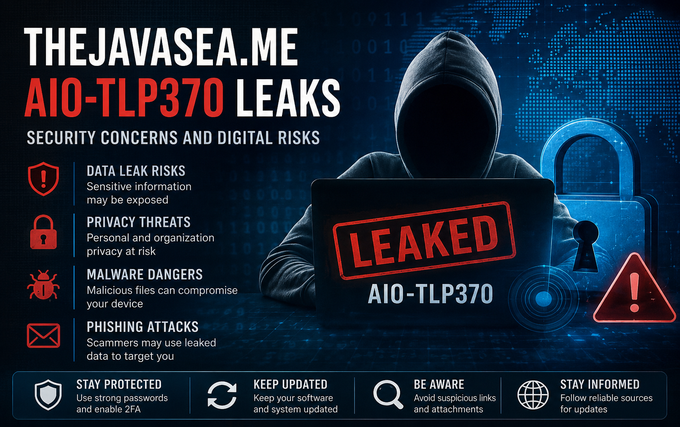

The digital landscape has been rattled by the emergence of thejavasea.me leaks aio-tlp370, a term that has rapidly gained traction across cybersecurity forums and tech communities. This phrase is not merely a fleeting headline but a stark reminder of the persistent vulnerabilities inherent in our digital ecosystem. The “AIO-TLP370” archive, reportedly a massive bundle of leaked data, has sparked serious questions about digital safety, personal privacy, and the structural weaknesses in how we manage sensitive information. In an era where data is the new currency, leaks of this nature can have cascading effects, from the compromise of individual credentials to the exposure of proprietary source code and internal tools.
Understanding the gravity of thejavasea.me leaks aio-tlp370 requires a shift in perspective; it is more than a simple data breach. The moniker “AIO,” which stands for “All-In-One,” suggests a package that aggregates a diverse array of digital assets into a single, downloadable archive. This could include anything from system logs and configuration files to hardcoded API keys and internal documentation. The broad scope of this leak makes it a roadmap for attacks, as it provides malicious actors with the necessary intelligence to plan intrusions, exploit vulnerabilities, and potentially launch large-scale automated campaigns. This incident underscores the urgent need for a robust digital risk management strategy, highlighting the dangers of insecure storage and the devastating potential of exposed internal blueprints.
Deconstructing the AIO-TLP370 Leak and Its True Scope
The specific nature of the leaked content in thejavasea.me leaks aio-tlp370 is what elevates it from a routine security incident to a significant threat. It is critical to understand that this is not a leak of just user passwords; it reportedly includes the very building blocks of software and IT infrastructure. Among the most dangerous elements are hardcoded secrets like API keys and access tokens, which act as digital keys to cloud services and backend databases. For attackers, discovering these secrets is the equivalent of finding a master key, allowing them to bypass authentication and move laterally within an organization’s network with ease. This type of exposure, often stemming from developers inadvertently pushing credentials to public repositories, represents a fundamental failure in secure coding practices.
Furthermore, the exposure of proprietary source code in thejavasea.me leaks aio-tlp370 presents a strategic advantage for cybercriminals. When source code is made public, it undergoes a form of white-box testing for attackers, who can scrutinize it line-by-line to identify zero-day vulnerabilities and logic flaws that would otherwise remain hidden. This is not just a theoretical risk; the operational intelligence gleaned from internal documentation and workflows can help attackers map an organization’s incident response procedures and defense mechanisms. By understanding the playbook of a targeted organization, attackers can time their campaigns to cause maximum disruption or exfiltrate data while bypassing security controls designed to stop them, demonstrating the profound digital risks involved.
The Immediate Cybersecurity Threats Posed by the Leak
Engaging with or even accessing the files associated with thejavasea.me leaks aio-tlp370 carries a high degree of cybersecurity risk for individuals and organizations. Cybersecurity experts consistently warn that files distributed through leak sites are frequently weaponized, acting as carriers for a wide range of malicious payloads. A user downloading a seemingly useful tool or script from this leak could unknowingly install malware such as keyloggers, which record every keystroke to steal passwords, or remote access trojans that give an attacker full control over the victim’s system. The consequences of this can be catastrophic, leading to personal data theft, financial fraud, and the compromise of entire corporate networks.
Beyond the immediate threat of malware, the thejavasea.me leaks aio-tlp370 archive itself is a treasure trove for identity theft and credential-stuffing attacks. The leaked credentials can be used to compromise accounts, not just on the affected platform but across the internet, where password reuse is common. The risk extends beyond human users to include machine credentials like API keys, which are increasingly targeted by threat actors. For organizations, the fallout can include operational disruptions, regulatory penalties, and severe reputational damage that erodes customer trust and investor confidence. In highly competitive markets, a security incident of this magnitude can have a long-lasting financial impact, making the initial curiosity about the leak a costly mistake for all involved.
Understanding the Data Types Exposed in the Archive
The thejavasea.me leaks aio-tlp370 incident is particularly concerning because of the diversity of data types it reportedly contains. Unlike a standard data breach that might expose only customer records, this archive appears to be a comprehensive collection of an organization’s digital DNA. This includes not only source code repositories but also internal deployment scripts, database schemas, and network topology diagrams. Each of these elements, when combined, provides a complete picture of how an organization operates, its security posture, and its potential weak points. This level of exposure is unprecedented and requires a reassessment of how we categorize and protect sensitive information.
Additionally, the archive likely contains logs from various systems that reveal patterns of user behavior, system performance metrics, and historical security incidents. These logs can be invaluable to attackers, allowing them to study past responses to security events and understand how to better evade detection. The presence of internal emails and messaging records in thejavasea.me leaks aio-tlp370 would further compound the risk, exposing internal strategies, employee communications, and potentially sensitive business negotiations. When all these data types are aggregated, the threat transforms from a simple leak to a comprehensive intelligence dossier that can be exploited for years to come.
How Cybercriminals Exploit Leaked Credentials
One of the most immediate dangers arising from thejavasea.me leaks aio-tlp370 is the exploitation of leaked credentials through automated attacks. Cybercriminals employ sophisticated bots that can rapidly test stolen username and password combinations across hundreds of popular platforms, a technique known as credential stuffing. Given that many individuals reuse passwords across multiple services, a single leaked credential from this archive can unlock numerous other accounts, creating a cascade of compromises. This automated approach allows attackers to achieve scale, targeting thousands of accounts simultaneously with minimal effort.
Beyond automated attacks, the exposed credentials in thejavasea.me leaks aio-tlp370 enable targeted social engineering campaigns. Armed with valid employee credentials and internal knowledge gleaned from other leaked documents, attackers can craft highly convincing phishing emails that appear to come from legitimate internal sources. They can also use the credentials to access internal communication platforms, impersonating executives to authorize fraudulent transactions or request sensitive information. This combination of technical access and social manipulation makes the exploitation of leaked credentials particularly dangerous, as it blends traditional hacking with psychological manipulation that often bypasses even sophisticated security controls.
The Threat of Zero-Day Discovery Through Source Code Exposure
The exposure of proprietary source code in thejavasea.me leaks aio-tlp370 represents a significant threat vector that extends far beyond the immediate release. When attackers gain access to source code, they can conduct extensive vulnerability research without the constraints of reverse engineering or black-box testing. This allows them to discover zero-day vulnerabilities, which are unknown to the software vendor and therefore unpatched. The time between the discovery of such a vulnerability and its exploitation can be extremely short, leaving organizations with little opportunity to respond. In many cases, these vulnerabilities remain undetected until they are actively exploited in the wild.
Furthermore, the source code from thejavasea.me leaks aio-tlp370 can be modified and repackaged to create malicious versions of legitimate software. Attackers can insert backdoors, data exfiltration routines, or ransomware payloads into the code and then distribute these modified versions through unofficial channels. Unsuspecting users who download these corrupted versions may believe they are using legitimate software while unknowingly compromising their systems. This technique, known as supply chain poisoning, extends the impact of the original leak far beyond the initial victims, potentially affecting thousands of downstream users and partners who rely on the compromised software.
Legal Implications and Compliance Violations
The thejavasea.me leaks aio-tlp370 incident carries significant legal implications that extend to all parties involved in the leak’s distribution or consumption. From a regulatory perspective, the exposure of personal data or proprietary business information can trigger violations of data protection laws such as the General Data Protection Regulation in Europe and the California Consumer Privacy Act in the United States. Organizations that fail to protect sensitive data may face substantial fines, mandatory audits, and legal action from affected individuals. The severity of these penalties often scales with the scope of the breach and the sensitivity of the exposed information, making the AIO-TLP370 leak particularly problematic from a compliance standpoint.
Beyond regulatory fines, the legal ramifications of thejavasea.me leaks aio-tlp370 include potential civil lawsuits and criminal prosecution. Intellectual property holders whose source code and trade secrets have been exposed can pursue legal action against those who disseminate or benefit from the leaked content. Individuals whose personal information has been compromised may file class-action lawsuits seeking damages for identity theft and other harms. Additionally, law enforcement agencies may investigate the distribution of the leaked data as a criminal matter, particularly if the content includes proprietary information from critical infrastructure or government systems. These legal consequences create a complex web of liability that discourages responsible parties from engaging with the leaked material.
Financial Impacts on Affected Organizations
The financial consequences of thejavasea.me leaks aio-tlp370 can be devastating and long-lasting for the organizations involved. Direct costs include incident response efforts, forensic investigations, legal fees, and regulatory fines, which can quickly accumulate to millions of dollars. Organizations may also need to invest heavily in system upgrades, security enhancements, and staff training to prevent future incidents, diverting resources away from growth and innovation. The cost of notifying affected customers and providing credit monitoring services adds another layer of financial burden, particularly when the breach involves sensitive personal information that requires ongoing protection.
Indirect financial impacts from thejavasea.me leaks aio-tlp370 often prove even more damaging than the direct costs. Loss of customer trust can lead to churn and reduced revenue, while damage to the organization’s reputation may hinder future business opportunities and partnerships. In some cases, organizations may face increased insurance premiums or difficulty securing cyber insurance coverage following a significant breach. The stock price of publicly traded companies often declines sharply following news of a major data leak, eroding shareholder value and affecting executive compensation. These financial consequences underscore the importance of viewing cybersecurity not as a cost center but as a critical investment in business resilience and long-term sustainability.
The Role of Internal Misconfigurations and Human Error
A critical examination of thejavasea.me leaks aio-tlp370 reveals that many such incidents stem from internal misconfigurations and human error rather than sophisticated external hacking. Common scenarios include misconfigured cloud storage buckets that inadvertently expose sensitive data to the public internet, developers accidentally committing secrets to public repositories, and employees falling victim to phishing attacks that grant unauthorized access. These errors are often exacerbated by complex IT environments where visibility into data access and sharing is limited. The prevalence of such mistakes highlights the need for organizations to implement robust security controls that account for human fallibility.
The thejavasea.me leaks aio-tlp370 incident serves as a powerful reminder that technical solutions alone cannot prevent data leaks. Organizations must also invest in comprehensive security awareness training that helps employees recognize and avoid common risks. This includes educating developers on secure coding practices, training all staff to identify phishing attempts, and establishing clear protocols for handling sensitive information. Additionally, implementing automated scanning tools that detect exposed credentials and misconfigurations can help catch errors before they escalate into full-blown leaks. By addressing both the technical and human aspects of security, organizations can significantly reduce their vulnerability to incidents like the AIO-TLP370 leak.
Best Practices for Password Management and Authentication
The thejavasea.me leaks aio-tlp370 incident underscores the critical importance of robust password management and authentication practices. At the individual level, adopting a password manager that generates and stores unique, complex passwords for every account is essential. This approach eliminates the dangerous habit of password reuse and makes credential-stuffing attacks far less effective. Users should also prioritize enabling multi-factor authentication wherever available, as this adds an extra layer of security that protects accounts even when passwords are compromised. Regular password changes, while once recommended, are now considered less important than ensuring password uniqueness and complexity.
For organizations, implementing enterprise-grade authentication solutions is vital in mitigating the risks exposed by thejavasea.me leaks aio-tlp370. This includes adopting single sign-on solutions that centralize identity management and allow for rapid revocation of access when credentials are compromised. Organizations should also implement adaptive authentication systems that analyze user behavior and contextual factors to identify suspicious login attempts. Additionally, enforcing strong password policies that prevent common or easily guessable passwords, coupled with regular security audits that test credential strength, creates a more resilient authentication framework. These practices, while requiring investment, provide substantial protection against the credential-based attacks that leaks like AIO-TLP370 facilitate.
Monitoring for Compromised Credentials
The thejavasea.me leaks aio-tlp370 incident highlights the necessity of proactive monitoring for compromised credentials. Organizations should implement dark web monitoring services that continuously scan for the presence of their domains and employee credentials in leaked datasets. When a potential exposure is detected, immediate action should be taken to force password resets and revoke any compromised access tokens. This rapid response capability is essential to prevent attackers from capitalizing on newly leaked credentials before the organization has time to react. Regular monitoring also provides valuable threat intelligence that can inform security strategy and resource allocation.
Individuals can also take proactive steps to monitor their own exposure following incidents like thejavasea.me leaks aio-tlp370. Utilizing credential monitoring services that alert users when their email addresses or other identifiable information appear in known data breaches provides early warning of potential risks. Regularly reviewing bank accounts, credit reports, and online accounts for suspicious activity is another crucial monitoring practice. When a potential compromise is detected, individuals should immediately change affected passwords, enable multi-factor authentication, and consider placing a credit freeze to prevent identity theft. These monitoring practices, combined with prompt response, significantly reduce the likelihood of successful exploitation following a data leak.
The Evolution of Cyber Threat Landscapes
The thejavasea.me leaks aio-tlp370 incident demonstrates how the cyber threat landscape continues to evolve, demanding constant adaptation from security professionals. Attackers have moved beyond simple malware distribution to comprehensive intelligence gathering campaigns that leverage leaked data for multifaceted attacks. The integration of artificial intelligence and machine learning capabilities has accelerated the speed at which attackers can analyze leaked datasets and identify valuable targets. This evolution has created a situation where the gap between a leak occurring and its exploitation narrows considerably, requiring organizations to operate on an assumption of compromise rather than relying solely on perimeter defenses.
Understanding this evolution is essential for grasping the significance of thejavasea.me leaks aio-tlp370 in the broader cybersecurity context. Modern attacks rarely follow a linear path; instead, they combine elements from multiple leaks, public information sources, and social engineering to achieve their objectives. The AIO-TLP370 archive, with its diverse data types, represents the kind of rich intelligence resource that enables this sophisticated approach. As the threat landscape continues to evolve, defenders must adopt similarly sophisticated strategies that integrate threat intelligence, behavioral analytics, and automated response capabilities to counter the increasingly complex tactics employed by cyber adversaries.
Building a Security Culture Within Organizations
The thejavasea.me leaks aio-tlp370 incident underscores the importance of building a strong security culture that permeates every level of an organization. A security culture goes beyond formal policies and training programs to encompass the shared values, attitudes, and behaviors that employees exhibit in their daily work. When security is deeply embedded in the organizational culture, employees become proactive defenders rather than potential weak links, actively seeking to identify and mitigate risks rather than viewing security as a hindrance to productivity. This cultural shift requires sustained leadership commitment, regular reinforcement, and recognition of security-conscious behaviors.
Creating such a culture in response to risks like thejavasea.me leaks aio-tlp370 involves several key initiatives. Organizations should establish clear communication channels for reporting security concerns without fear of reprisal, ensuring that employees feel empowered to speak up when they identify potential issues. Incorporating security considerations into performance evaluations and reward systems reinforces the importance of security in day-to-day operations. Additionally, involving employees in security decision-making and soliciting their feedback on security measures increases engagement and ownership. Over time, this cultural investment pays dividends by reducing the likelihood of human errors that lead to data exposure and creating a workforce that actively contributes to organizational resilience against digital risks.
Conclusion
The thejavasea.me leaks aio-tlp370 is more than just a single leak; it is a microcosm of the systemic digital risks that define the modern online era. This incident highlights how the convergence of insecure coding practices, misconfigured storage, and an ever-present threat of cybercrime can lead to a catastrophic data exposure. The archive’s release serves as a real-world lesson in the high stakes of data security, proving that even a single mistake in handling sensitive information can provide malicious actors with a comprehensive roadmap for attack. It has irrevocably underscored that in our interconnected world, the security of any one entity is tied to the collective resilience of the entire digital ecosystem.
Moving forward, the conversation around leaks like thejavasea.me leaks aio-tlp370 must evolve from mere damage control to proactive prevention. The trend of attackers using industrial-scale operations and automation to exploit vulnerabilities means that the speed of detection and response is more critical than ever. Defenders must implement comprehensive strategies that cover everything from credential hygiene to third-party risk management and continuous dark web monitoring. The goal is to create a digital environment where the barrier to entry for attackers is so high that it deters casual curiosity and forces even the most sophisticated actors to expend considerable resources. As we navigate this landscape, the lessons learned from AIO-TLP370 will be indispensable in building a more secure and resilient digital future for all.
Frequently Asked Questions
What exactly is the thejavasea.me leaks aio-tlp370?
The term refers to the unauthorized release of a large data archive, reportedly containing a mix of proprietary source code, internal system configurations, hardcoded credentials, and operational documentation, hosted or referenced on the website TheJavaSea.me. The AIO designation stands for All-In-One, suggesting a bundled package of diverse digital assets that collectively provide a comprehensive view of an organization’s digital infrastructure.
Is it safe to download or interact with the thejavasea.me leaks aio-tlp370?
No, it is not safe. Files associated with such leaks are frequently weaponized with malware, including keyloggers, trojans, and ransomware. Engaging with this content also carries legal risks for data and copyright infringement and supports unethical cybercriminal activities that harm individuals and organizations alike.
What are the primary risks associated with this type of leak?
The primary risks include credential theft leading to account takeover, the exposure of API keys that can compromise entire networks, and the reverse-engineering of source code to find and exploit vulnerabilities. It also poses significant risks for data theft, financial fraud, and operational disruption for organizations whose digital assets are exposed.
How can I protect myself from the fallout of similar data leaks?
Key protective measures include using strong, unique passwords with a password manager, enabling multi-factor authentication on all critical accounts, and being vigilant against phishing attempts. Regularly monitoring accounts for suspicious activity and avoiding downloads from unknown sources are also essential steps for maintaining digital safety.
What is the legal implication of downloading data from a leak site?
Downloading or sharing leaked content often violates copyright laws, software licensing agreements, and data protection regulations like GDPR. Depending on the jurisdiction and the nature of the data, individuals may face fines, legal notices, or other legal penalties for accessing or possessing such material without authorization.
How can organizations prevent similar data leaks?
Organizations should implement zero-trust security architectures, conduct regular security audits, provide comprehensive employee training, and deploy automated scanning tools to detect misconfigurations and exposed credentials. Establishing a strong security culture that encourages reporting of potential issues is also essential for prevention.
What role does multi-factor authentication play in preventing leak exploitation?
Multi-factor authentication provides a crucial additional layer of security that protects accounts even when passwords are compromised. By requiring a second form of verification, such as a code from an authenticator app or a biometric factor, MFA prevents attackers from using stolen credentials alone to gain unauthorized access.
How long does the impact of a data leak like this typically last?
The impact can persist for years, as leaked credentials and information are traded and reused across multiple platforms. Organizations and individuals must remain vigilant long after the initial incident, monitoring for signs of exploitation and maintaining enhanced security practices to mitigate ongoing risks.